i. NOTES
Take heed: One, this is fanwank. Calling it gospel is silly and refuting it only on that basis shameful. This is just for fun.
Two, a major assumption is being made: All Sonic characters excluding humans, robots, gods/entities, and Chao are considered closely related enough biologically that they share the same genetics for coloration; I mean, Fang somehow exists after all. As such, the term "coat" not only denotes fur but feathers and scales too.
Third, this is only in reference to official Sonic characters, but if your fan character is applicable to all of this, then congrats, he/she's probably not a sparkly mess. But if this proves popular enough, I may go ahead and start adding the genes necessary for said sparkly messes. This is indeed a work in progress and may be for some time, but it appears solid enough for display.
The idea simply came from reading about
dog coat colors on the Internet. Major help was also given by my friend Lil Avii who's an aspiring vet and knows this stuff more readily off the top of her head. Extra help, suggestions, and clarification is appreciated by other readers.
And finally,

You get popcorn if you read the whole thing. =D
0. BASICS
Show Content
SpoilerGenetics is the study of heredity, how variation is passed from generation to generation.
A single gene is composed of two parts, sometimes out of many, called alleles which can be dominant or recessive. Dominant genes generally override any information of recessive genes. Alleles can be paired up in many ways.
Ex. A pair of alleles (simply called a series or more properly a locus) defined as A can be paired up as AA, Aa, or aa; both AA and Aa are dominant while aa is recessive.
A complete compiling of series that affect a particular trait in an organism, such as color, is known as a genotype.
Of course, genes are passed from parents to offspring. Although the chances of perfectly predicting the outcome of all offspring's appearance is small, the use of a
Punnett square can give one an idea of possible outcomes. Taken one series at a time, Punnett squares can be used to create entirely new genotypes from the parents'.
What this guide aims to do is use the above science to create a fictious genotype for Sonic characters that will allow fans and shippers to reliably predict not only official characters genotypes, but to take it further and create sensible-looking offspring between officials that don't suffer the Disney Syndrome of looking completely like one parent or the other. Hopefully, it will also grow to be big enough to be used on almost all fan characters or help character creators to make rational but still unique-looking characters.
All you'll find here currently is a list of genes that affect color and pattern and an explanation of how they work. You will also find a list of all the series near the end, followed by a fun experiment between two official characters.
1. PRIMARY COLORS
Show Content
SpoilerThere are two types of coat pigment, or melanin, present in Sonic characters: Warm and cool.
Warm is the dominant default and displays as red, but it can be recessive to turn yellow. Cool melanin is recessive and displays as blue. The Triple Threat are the prime example: Knuckles is warm, Tails is warm recessive, and Sonic is cool.
Warm consists of two alleles- G and g. Cool has three: J, j, and jd. The recessive traits don't affect blue's hue but rather its tone. j will be navy while jd will be light blue. Because the color blue possesses the potential for shades and tints on its own, blue areas can't possess any of the genotypes that affect darkening and dilution in warm melanin. These will be explained below.
Also, because the display of cool melanin in and of itself is recessive, another set of genes exist to override the display of warm melanin: The F series. F won't hinder the display of warm melanin, but f will.
Many other genes exist that can mix warm and cool melanin to create secondary and tertiary colors, dilute or concentrate them for different shades and tints, distribute the melanin in unique patterns across the character's body, or block one or both types from even showing.
Furthermore, the most powerful series A consists of two major genes for markings: Non-solid and solid. A is non-solid and opens the door to plenty of other series that determine the various markings that can occur within a single character. Solid coloration, or a, restricts markings.
2. CONCENTRATION & DILUTION
Show Content
SpoilerWarm melanin isn't just limited to its primary intensity. It can also be darkened or lightened.
The former is called concentration and represented by the C series. C produces concentrated colors in a pattern, although more recessive alleles like c and cb can make concentration a more prominent trait in the coat with or in spite of markings respectively. In the case of ca, sometimes it's simply inhibited altogether.
The latter is dilution, the E series, which means reds and yellows become pinks and lemons. Dilution functions the same as concentration with E, e, ed, and ea respectively but is simply recessive. Ex. Both Amy and Knuckles share the same dominance for red, but Amy also possesses eaea, making her all pink.
In instances where a concentration is dark enough to be black, it's impossible to tell whether or not the coat is actually warm or cool without markings showing actual color. The easiest example is Shadow whose red markings let us know he's warm but simply possesses cc in most places on his body.
Dilution cannot result in true white; hints of color will always exist. However, extremely light grays such as Silver can be considered white by the layman.
3. TRUE WHITE
Show Content
SpoilerTrue white, the B series, is the inability to display melanin. It's recessive, and as suchb causes white in patches and patterns. bd works outside of patterns while ba affects the entire body. Like black, all white can be found in warm and cool characters, making Rouge a bit of a visual anomaly. However, if we're to assume hair on her wings gives them their purple color, she'd merely be a cool character with a strong bd instead. Purple being a cool color will be explained below.
4. SECONDARY & TERTIARY COLORS
Show Content
SpoilerThe aforementioned sections have discussed the primary colors, black, and white. However, green and purple happen when a set of genes, the I series, allows both warm and cool melanin to display simultaneously due to microscopic banding of a second color occurring on each hair/scale. It's also recessive, meaning i allows for this banding.
Remember, all Sonic characters have both warm and cool melanin. Which melanin is subject to banding depends on the dominant color. Ex. Magenta and yellow-green characters like Espio and Vector are warm and warm recessive respectively with blue banding. Big's purple mostly shows blue, meaning he's cool with red banding.
You may have noticed the problem with orange. Orange characters are special since yellow is the recessive of red. Because of this, series H exists, allowing both dominant and recessive warm pigment to display in the same type of banding. Cream and Marine are the most prominent examples.
5. PATTERNS
Show Content
SpoilerUntil now, we've only learned how colors can show or recede within a character. Now we'll explore how colors can be arranged in certain patterns.
With the A series, there's two major families of patterning: Non-solid and solid. Non-solid is dominant and allows for many genomes that create certain patterns to show. Solid, of course, does the opposite. Most patterns are recessive, but many can easily occur within the same character, creating a near-infinite level of variation. All of the recurring patterns are below:
[ul]
[li] Mantling (K Series): Mantling is a term in reference to a second color appearing on the chest and extending down the abdomen. It's most commonly present as a mere mark or a covering of the entire belly and is k, followed by a full mantle kr in which the muzzle and cheeks are also affected.
In an even more recessive case ka, only the muzzle and/or inner ears possess white while all abdominal mantling is repressed. Mantling most often occurs in characters who are b or bd, although B types are possible.
Some examples of mantled characters are Tails, Knuckles, Blaze, and the Babylon Rogues.
[li] Points (L series): The extremities of the character, which typically include the ears, lower arms, lower legs, and the tips of the tail, and long hair or feathers, are a darker color than the center of the body. Pointing is rarely that extreme and thus represented by l, although it can happen if a character is la. Big is an example of a pointed character.
[li] Striping (M series): Stripes are streaks of parallel color. These streaks occur vertically and usually on the top of the head (m), although such bands are allowed to exist elsewhere such as the outside of limbs or in spines and hair (ma). Shadow is the most extreme example.
[li] Ringing (N series): Another type of stripe which occur in parallel succession and encircle entire limbs. Although these are technically stripes, rings can occur without any sign of traditional striping, meaning they're unaffected by striping and thus their own series. Rings generally occur on the tail as n, but the recessive na causes this pattern to appear on other limbs. Marine is an example of basic ringing.
[li] Single Masking (O Series): Masking occurs when any area around the eyes displays a second color. The markings can range in size from brief streaks or outlines, such as with Vector and Espio, to the entire eye being encircled as with Cream.
[li] Dual Masking (D Series): A mask that's split into two distinct colors. Split masking actually relies on the C series to show and allow concentrations, dilutions, and warm/warm recessive or warm/cool duality in the areas around the eyes regardless of the genetics of the rest of the coat. It is recessive, but has two variants- d which will always include a black concentration with another color, usually red, and dc which causes a mask to be split between dilution and concentration of the coat's main color. Respective examples of this mask include Jet and Marine.[/li][/ul]
6. SERIES SUMMARY
Show Content
SpoilerThis is a list of all the genes covered thus far. They're ordered in terms of dominance, thus higher genes are more dominant than lower ones. Also, higher series will affect every other relevant series below it. Ex. Characters that are aa will be a solid regardless of the genes they possess for markings:
A Series (effects the ability to show patterns)
A: Non-solid. A character who is AA or Aa will have markings
a: Solid color. Characters are aa if they show no markings in their fur.
B Series (white)
B: Does not inhibit any melanin from showing. BB and Bb characters will have color.
b: bb and baba characters have some inhibited melanin, but this is only pattern specific.
bd: bdbd and bdba characters have white as a dominating color on their body regardless of patterns; this doesn't have to result in all white.
ba: baba characters are totally white.
C Series (concentration)
C: A character that is CC, Cc, Ccb and Cca and non-solid will have concentration occur only within markings.
c: A character that is cc, ccb, or cca will have concentration occur where there aren't specific markings
cb: A character that is cbcb or cbca will have concentration occur all over whether or not markings exist; this doesn't have to result in black.
ca: A character that is caca cannot display concentration regardless of if they're solid or non-solid.
D Series (affects the display and color of a dual mask)
D: DD, Dd, and Ddc makes dual-masking (two colors around the eyes) impossible.
d: dd and ddc masks will include a black concentration and warm melanin.
dc: dcdc masks are a concentration and dilution of the primary color.
E Series (dilution)
E: EE, Ee, and Eed characters cannot display dilution.
e: ee and eed characters can only display dilution in markings.
ed: eded and edeb characters will have dilution occur where there aren't specific markings.
ea: eaea dilution occurs across the entire body regardless of markings.
F Series (effects display of warm melanin)
F: FF or Ff will allow warm pigment to display
f: ff will inhibit warm pigment to show blue.
G Series (effects color of warm melanin)
G: GG or Gg is dominant red
g: Recessive red; gg will create yellow.
H Series (allows both dominant and recessive red to display in banding)
H: With HH and hh, no banding occurs, meaning warm characters are either red or yellow.
h: hh creates banding and allows for the color orange.
I Series (effects the mixing of warm and cool melanin)
I: II and Ii inhibits banding, meaning characters are a solid, primary color.
i: ii creates banding.
J Series (effects intensity of cool melanin)
J: JJ, ji, and Jjd all result in normal blue.
j: jj or jjd concentrate blue, making it darker.
jd: jdjd is diluted blue, making it lighter.
K Series (mantling)
K: KK, Kk, Kkr, and Kka restricts all mantling.
k: kk, kkr, and kka causes normal mantling to begin at the chest and extend down the abdomen.
kr: krkr and krka causes extended mantling along with the mantle color to appear in the muzzle and ears.
ka: kaka restricts abdominal mantling, leaving only the muzzle and inner ears mantled.
L Series (points)
L: LL, Llf, and Lla causes no pointing to appear.
l: ll and lla create partial pointing where only a few extremities on the body are pointed.
la: lala is the cause of full pointing where every possible extremity is pointed.
M Series (striping)
M: MM, Mmb, and Mma inhibits striping
m: mm and mbma creates creates only vertical head stripes.
ma: mama creates striping all over.
N Series (rings)
N: NN, Nn, and Nna restricts ringing
n: nn and nna cause cause rings to occur on the tail.
na: nana causes rings to occur on other appendages..
O Series (single masking)
O: OO and Oo causes no masking
o: oo causes normal masking occurs to any degree.
7. SHIPPING FUN
Show Content
SpoilerNow with all of this covered and documented, let's put it into action by assuming a fun if potentially disturbing scenario. Let's say six years into the future, Sonic decides to travel through dimensions to visit Marine. She's grown up now and toned down the annoying Australian slang which Sonic finds amazingly appealing to not to have to listen to. So they marry and eventually have quadruplets. What might all of these children look like in terms of color and pattern?
To figure this out, we first need to determine likely genotypes for Sonic and Marine. Of course, without parents to consider nor genetic testing for cartoons being available yet, there's the possibility of these entire genotypes being inaccurate, but they'll still be rational for testing.
Sonic: aaBbcacaDDEeffggHHIiJjKkrLlMmNnaoo
Marine: AabbCCdcdceeFFGGhhiiJJkakallmamannOo
Those are certainly long sequences, so what do we do now? We use Punnett squares. Tons. Sonic's phenotypes are on top while Marine's remain to the left, although the outcomes will be the same regardless:
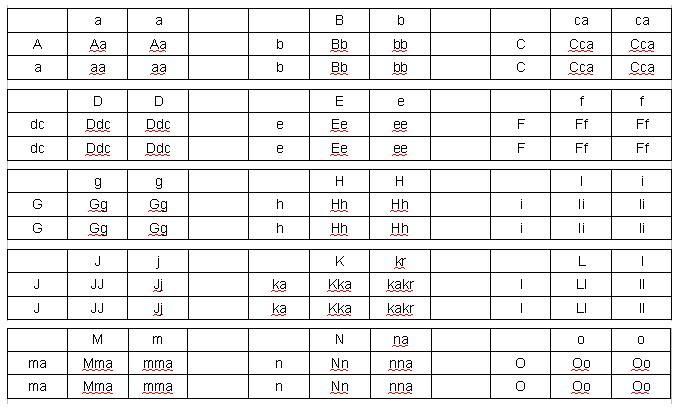
There we go. Now we just rearrange the sequences into proper genotypes:
Child 1: AaBbCcaCcaDdcEeFfGgHhIiJJKkaLlMmaNnOo
Child 2: AabbCcaDdceeFfGgHhIiJjkakrllmmannaOo
Child 3: aaBbCcaDdcEeFfGgHhIiJJKkaLlMmaNnOo
Child 4: aabbCcaDdceeFfGgHhIiJjkakrllmmannaOo
In summary, Child 1 would be a solid red with a concentrated single mask around the eyes. Child 2 would also be red but have extended mantling, partial pointing, stripes on the head, and a ringed tail. The mantle would most likely be white while his/her points, stripes, and rings displayed both dilution and concentration of red. Children 3 and 4 would simply be a solid red all over.
Note, each child only has a 25% chance of developing the specific markings outlined above. Biology is indeed random, so all of them could end up solid red or end up all beautifully-marked like the second darling. But in a perfect world, well, most of Sonic and Marine's children would still be weird-looking.
8. EDITS & HISTORY
Show Content
Spoiler9/5, 3:35 A.M: Edits & History section added, Basics section dedicated to overview of genetics, Primary Colors section created, more relevant character examples added, incorrect terms fixed, edited for style and grammatical mistakes, appropriate links added.
Also, I figured this would be the best place to put this. It's not a tutorial and completely unofficial. But if another staffer feels privy to move it, fine by me.

